Closeup of a mouse gnawing wire in a house near the wall and electrical outlet.

Mice may have big eyes and cute whiskers, but that doesn’t mean you want them in your house. Mice chew things, are unsanitary, and can spread disease. You should act to remove them at the first sign of their presence. Better yet, prevent them from ever invading your home.

What attracts mice to human spaces?

A mouse’s natural habitat is outdoors, mainly in wooded areas. But they will enter your home in search of certain benefits, such as:

  • Food. Mice have a keen sense of smell, and food in your house is an irresistible attraction.
  • Water. Mice are attracted to water; they’ll enter your home to find it during drought. Irrigating vegetation against your house draws mice right to your threshold, and home invasion is the next step.
  • Warmth. Winter is prime time for mice to enter and nest in your home, seeking escape from the chill.

How do you know if you have mice?

Rarely will you see a mouse unless you have a bad infestation. Instead, you usually see evidence of their presence: elongated mouse poop droppings smaller than a grain of rice, bags of food with holes chewed into them and the resulting shredded paper, or the upholstery stuffing they use for nesting material tucked away in an obscure place.

Mice live up to 18 months and breed prolifically. If you see evidence, you don’t have one mouse: You likely have many.

An ounce of prevention is worth a pound of cure

The best solution for a mouse infestation is to prevent one from occurring in the first place. To keep mice out of your house, take the following steps.

  • Don’t leave out a welcome mat. Mice can squeeze through an opening the size of a dime. They can also sense warmer air flowing from tiny openings into your home. Survey your home’s entire exterior for openings through which a mouse can infiltrate. Look around windows and doors, the foundation, the roofline and the chimney. Cut sheet metal or metal wire grid to fit, then nail it in place. Spray foam sealer is an easy fix but can be easily chewed through.
  • Remove the attraction of food. In the kitchen, always seal food. Transfer grains and crackers from packages into snap-lid canisters that mice cannot chew through. Sweep the kitchen floor every day and wipe the counters. Put pet, bird and livestock feed in rigid, sealed containers in the garage or storage shed. Sweep up any spilled grain or feed. 
  • Cut back vegetation around the outside perimeter of your home. Clean up any unruly vegetation around your foundation. Cultivated flower beds are fine, but uncontrolled grass or thick ground cover-up against your foundation provides a haven for rodent activity. Don’t allow standing water near your foundation.

Eliminating mice from your home

You may be able to alleviate a mouse invasion with traps.

  • Spring traps, which snap shut on the mouse, are the longtime method you’ve probably seen. You may be squeamish about the mouse’s violent demise, but actually, this method is the fastest and most humane.
  • Glue traps are like flypaper for mice. The mouse gets stuck on the paper when it steps on it and cannot get away. One strip of glue paper can catch several mice. 
  • Poison traps lure the mouse to poisonous bait that smells like food. These traps pose two risks. One is that the poison trap may be attractive to children and pets and thus must be placed where they cannot reach it. The second is that mice may eat the poison, wander into a wall space, die and cause a terrible odor.
  • Homemade bucket traps use a five-gallon pail with a board ramp to the top. The pail is filled with several inches of water, and a dowel rod inserted in a cardboard paper towel roller spans the top. Bait is smeared on the cardboard roll. When the mouse climbs the ramp and ventures onto the roll, it spins and the mouse drops into the water, where it drowns.

When to call a pro

Mice breed far faster than you can control with small-scale traps. When you see droppings and chewed food packages in several places, you probably have a bad infestation, and it’s time to call in a pest control professional.

July 4, 2024

Home Warranty

July 4, 2024

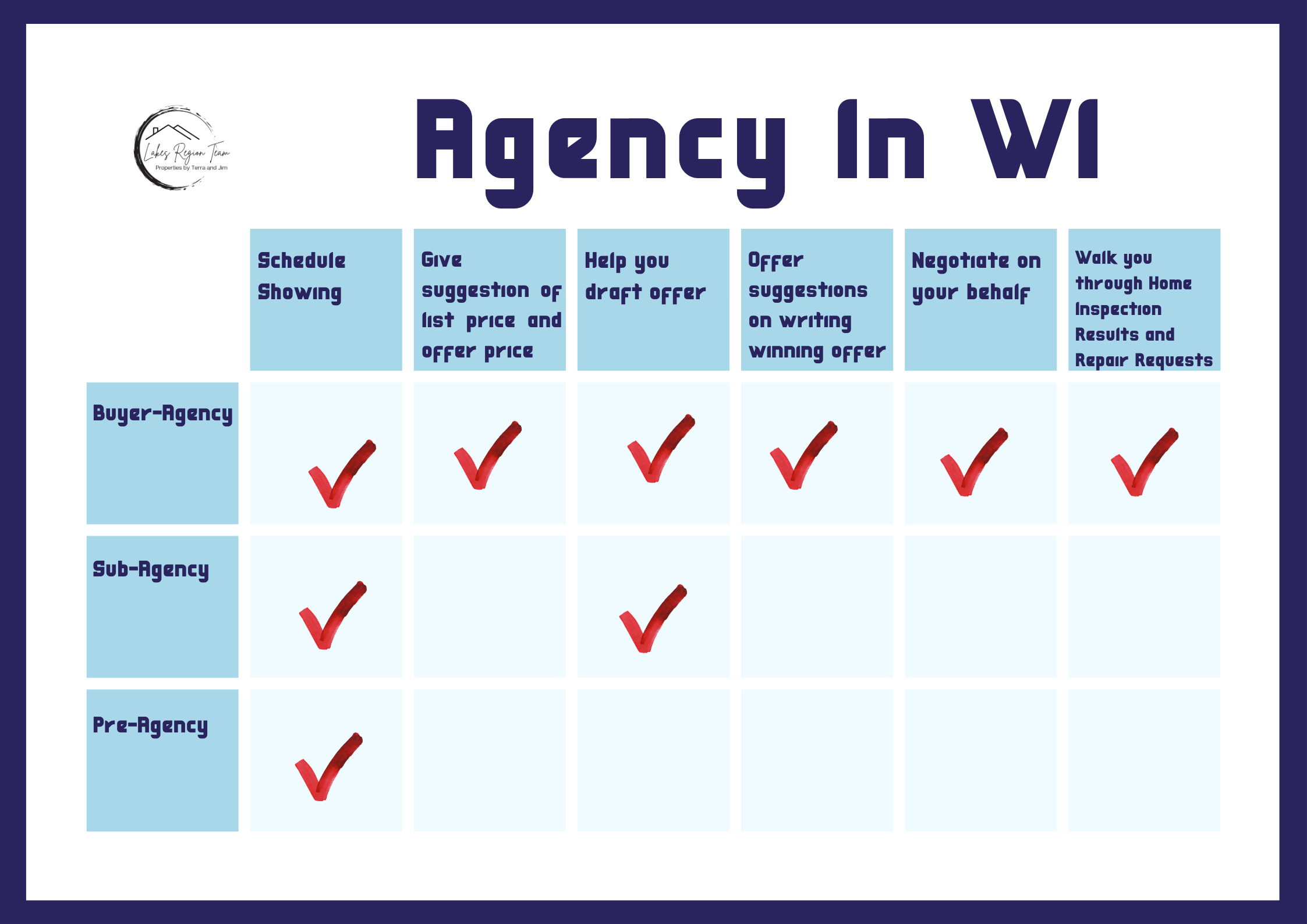
Agency

July 4, 2024

Ready to list your home?

Posted in Selling your home
July 4, 2024

Real Estate Contingencies


What is a Contingency?


In a real estate contract, a contingency is a requirement that must be satisfied before completing a home sale. If any conditions outlined in the purchase agreement are not fulfilled, the buyer can withdraw from the contract without forfeiting any earnest money. A contingency is satisfied by one of the following 1) deadline expires or 2) amended to be removed from offer.


Common Contingencies

  • Home Inspection

  • Appraisal

  • Financing

  • Well, Water, and/or Septic

  • Radon

  • Termite Inspection

Posted in Purchasing A home
July 4, 2024

Closing Costs

Closing Costs

When sellers calculate their profits from a home sale, they often overlook seller closing costs. These costs, ranging from 1% to 7% of the sale price, are typically covered by sellers. Here's what we'll discuss:

  • Understanding closing in home sales
  • Breakdown of closing costs
  • Inclusion of various fees in closing costs
  • Who pays which closing costs
  • Methods to calculate closing costs
  • Considerations for paying buyer's closing costs

Understanding Closing in Home Sales:

Closing is the phase in a home sale where ownership is transferred to the buyer. This process involves money and document exchanges to fulfill the contract agreements by both parties.

Breakdown of Closing Costs:

Closing costs are separate from agent commissions and include various fees paid by both buyers and sellers. Sellers usually cover 1% to 3% of these costs, deducted from the home sale profit.

Inclusion of Various Fees in Closing Costs:

  • Title search to verify ownership: $300 to $600
  • Title insurance for protection: $1,000
  • Home inspection for property issues: $300 to $500
  • Appraisal to confirm property value: $450 to $650
  • Survey to define property boundaries: $350 to $500
  • Credit report for buyer evaluation: $20 to $50
  • Loan costs and prepayment penalties: 0.5% to 1.5%
  • Mortgage payoff and penalties: Variable
  • Outstanding property amounts: Variable
  • Transfer taxes based on property value: Variable
  • Recording fees for property transfer: Variable
  • Settlement or attorney fees: $150 to $500

Who Pays Which Closing Costs:

Buyers generally pay more closing costs than sellers, with costs averaging 5 to 6% of the sale price for buyers. Sellers cover fees like buyer's title insurance, mortgage payoffs, outstanding property amounts, attorney fees, transfer taxes, and recording fees.

Calculating Closing Costs:

Closing costs vary based on property value, state requirements, loan terms, and agent fees. Use a home sale calculator to estimate net proceeds after factoring in moving costs, repairs, and agent fees.


Posted in Market Updates
April 25, 2024

Checklist: April To-Dos for Homeowners

Everyone is stressed and anxious about the COVID-19 crisis, but one positive to staying at home is the number of  chores you can check off your list. Spring showers and increasingly warmer temperatures signal the beginning of April —  a great month to prepare for gardening and summer living.

  1. Inspect for animal intruders. Just like humans, animals seek warmth in winter so look for evidence of squirrels, raccoons, rats and possums that may have clawed or chewed a hole in the roof flashing to access your attic. If you find evidence of invaders, call a professional wildlife removal service. They are considered essential home services in most states.
  2. Trim tree limbs. Survey trees near your house for limbs growing too close to the roof or siding. Hire a professional arborist, if limbs are too high, extremely heavy, or near power lines. Landscaping professionals are also on the list of essential services in many states so they are still available for hire.
  3. Organize and clean the garage and shed. Clean and organize spring and summer gardening tools and toys. Encourage family members to put belongings away in their proper locations.
  4. Eliminate mosquito breeding areas. Melting snow and spring rains may leave puddles around your yard or in landscape decorations. Remove standing water to discourage mosquitos.
  5. Check for wood-destroying insects, such as carpenter ants and termites, which can damage your home. Carpenter ants are relatively easy to spot outside, entering your home through small openings. Look for the mud tubes left behind by termites. If spotted, call a pest control professional, they too should be available to treat outside the home.
  6. Time for an AC inspection. The hot summer is right around the corner, so it’s time to have your air-conditioning system professionally inspected. A service technician will inspect the air handler, clean the air conditioner condenser coils, inspect the evaporator coil and check the refrigerant level. Depending on where you call home, this chore can be done in April, May or June, so you may decide to wait until the stringent social distancing guidelines are lifted. Meanwhile, do your part to keep the AC system running smoothly. Change the filters on a regular schedule. Outside, keep bushes cut back from the condenser coils so they can breathe.
  7. Inspect the sprinkler system. Turn on the system and inspect as it switches from zone to zone. Check for damaged sprinkler heads. Replace or adjust as needed.
  8. Gardening goals. In March or April, depending on your climate, it’s time to start thinking about a spring and summer garden. Clear raised planting beds of debris, and turn soil. Most seeds and plants can be purchased online. Start seedlings inside. Do not plant until after the last frost date in your area.
  9. Provide nutrients for your landscape. Depending on your climate zone, March or April is the time to apply fertilizer and weed control. Consult local agricultural extension services online for gardening expertise.
  10. Spring clean. On a warm day in April or May, open up the windows and air out your home. Clean carpets, upholstered furniture and fabric window treatments. Vacuum window blinds and behind large furniture pieces. If you haven’t already, clean windows and repair any broken screens. The kids may actually enjoy helping with the lower level!
April 25, 2024

Tax Benefits of selling your home

The tax advantages of buying and owning a home are well known, but what happens when you sell? Read on to learn about the tax benefit you may accrue when you sell your house.

Rules affecting capital gains taxes

Most tax benefits available for home sellers relate to how any profit, or capital gain, you make on the sale of the house is taxed. If you meet certain criteria, some or all of that gain will be shielded from capital gains taxes, which can run as high as 20 percent.

Homeowners are eligible for this very nice tax benefit If they have owned the house for at least two years and lived in it for at least two of the last five years. Taxpayers who meet these criteria and file as individuals can exclude $250,000 of their gain from capital gains taxes. For married couples filing jointly, the exclusion is $500,000.

Calculating the home’s tax basis

To determine your capital gain on a home sale, you must first calculate your basis in the house. A home’s basis is the price paid for the home plus the cost of certain capital expenditures invested in the property. The IRS defines eligible capital expenditures as work that materially improves the value of a home, substantially extends the house’s life, or adapts the house to another usage. The price at which the home is sold minus the basis is the capital gain on the sale.

Be aware that the IRS may not view some of the work you’ve done on your home to be a capital expenditure eligible to be added to your house’s basis even where you believe it increased the value or longevity of the property. This holds true even if you undertook these projects just before selling. For example, the IRS will not allow taxpayers to increase their home’s basis by the cost of painting, repairing part of a damaged roof, cleaning the carpet or replacing plumbing with identical materials.

Another tax benefit relates to the transactional expenses of selling your home. The IRS allows sellers to reduce their capital gain by the amount of the real estate commission you paid, any fees paid at closing, and the like.

The tax benefit of homeownership

Don’t forget that any interest you pay on your mortgage in the year you sell your home counts as a tax deduction for that year. The new tax law has limited the deductibility of mortgage interest; for homes purchased after December 14, 2017, the amount of mortgage subject to this tax benefit is capped at $750,000. You can also deduct property taxes you paid up in the sales year up to the date of closing the sale, subject to a $10,000 limit on state property, sales, and income taxes.

Related – Tax Benefits of Homeownership

Posted in Market Updates
July 31, 2017

Curious About Local Real Estate?

Receive the Latest Local Market Stats

Curious about local real estate? So are we! Every month we review trends in our real estate market and consider the number of homes on the market in each price tier, the amount of time particular homes have been listed for sale, specific neighborhood trends, the median price and square footage of each home sold and so much more. We’d love to invite you to do the same!

Get Local Market Reports Sent Directly to You

You can sign up here to receive your own market report, delivered as often as you like! It contains current information on pending, active and just sold properties so you can see actual homes in your neighborhood. You can review your area on a larger scale, as well, by refining your search to include properties across the city or county. As you notice price and size trends, please contact us for clarification or to have any questions answered.

We can definitely fill you in on details that are not listed on the report and help you determine the best home for you. If you are wondering if now is the time to sell, please try out our INSTANT home value tool. You’ll get an estimate on the value of your property in today’s market. Either way, we hope to hear from you soon as you get to know our neighborhoods and local real estate market better.

Posted in Market Updates